The Best Gay Honeymoon Destinations

When I write about lesbian honeymoon destinations, I have to start by explaining that the infrastructure those couples are looking for mostly does not exist. There is no lesbian Provincetown, no network of guesthouses run by and for queer women, no equivalent of a gay resort town.
For gay men, the problem is the opposite, and it is a much nicer problem to have. The infrastructure is enormous. There are entire towns organized around us. There are beaches with our name on them, hotels where every guest is a gay man, weeks of the year when a whole island turns over to us. If you want that, you can have it, in more places than you probably realize.
Which means the interesting question is not "where can we go?" It is "do we actually want the scene on our honeymoon, or do we want to be somewhere beautiful that treats us well without that being the point?"
Those are two completely different trips. Both are wonderful. I book both constantly, and I have watched enough couples land in the wrong one to think the question is worth asking out loud before anybody puts down a deposit.
So here is the list, split the way the decision actually splits.
Part One: When the Scene Is the Point
There is a specific pleasure to a destination where you are the default. Where the guy pouring your coffee is family, where nobody looks twice when you kiss your husband on the beach, where the entire town is built around the assumption that you exist. If that is the honeymoon you want, these are the places I send couples.
A quick note first, since you have probably already thought of them: Key West, Provincetown, and Palm Springs are all excellent, and they are all domestic. Rainbow Getaways is an outbound agency, so this list stays international. If you want to talk through the stateside options, that is a conversation I am always glad to have, it just is not this post.
Puerto Vallarta, Mexico

If a couple asks me for one gay honeymoon destination and gives me nothing else to work with, this is usually where I land.
Puerto Vallarta has the most complete gay district in Mexico and arguably in the Americas. The Zona Romántica, also called Old Town, is genuinely walkable, and it works on two levels at once. The northern end is where the bars and clubs concentrate. The southern end, running down to Playa Los Muertos, is where the days happen: beach clubs, loungers, long lunches, the historic gay stretch of sand at the south end of the beach. You can have both without ever getting in a car.
What makes it work for a honeymoon specifically is that the crowd skews couples rather than circuit. It is a small coastal city with real restaurants, a genuine gay-owned hotel and guesthouse scene rather than a handful of chains flying a flag in June, and an ease to it that a lot of couples do not expect until they arrive.
Mexico has nationwide marriage equality. The Supreme Court opened the door in 2015 and the last holdout state finished the job in October 2022, so all thirty-two states are covered.
Timing matters more here than most people realize. The dry season runs roughly November through May. June through October is hot, wet, and carries hurricane risk. Vallarta Pride lands in May, and the town sells out months ahead. For a honeymoon, I usually point couples at late April, early May before Pride, or November: warm water, everything open, and neither the winter high-season crush nor the Pride crowd.
Mykonos, Greece

Mykonos has been ours since the 1970s, when Jackie Onassis started showing up and pulled a whole international set with her. The first gay bars opened on the island in the mid-seventies, and the local economy, which had been fishing, decided very quickly that this was a good development. Fifty years later it is still the most famous gay island in the world.
The geography is worth understanding before you book, because Mykonos is really several islands depending on where you put your towel. Elia is the main gay beach now, the largest on the island, marked by a rainbow flag and getting more clothing-optional and more cruisy toward the rocks at the far end. Super Paradise is the party beach, and the club there starts building in the late afternoon. And then there is Agrari, which is a five-minute walk over the rocks from Elia and is quiet, uncrowded, and almost nobody writes about it. That is the honeymooner's beach, and knowing it exists is most of what you need to know about Mykonos.
In town, Chora and Little Venice hold the bar concentration, and the Cycladic architecture is every bit as beautiful as the photographs suggest.
Greece legalized same-sex marriage in February 2024, becoming the first Orthodox-majority country in the world to do so.
The single most useful thing I can tell you about Mykonos is to not go in August. August is XLSIOR, plus the entire European holiday month, and the island is at maximum density and maximum price. Late May, June, or the second half of September give you the same island, the same water, the same scene fully operational, at a fraction of the intensity and a meaningful fraction of the cost.
Sitges, Spain

Sitges is the answer for couples who want a gay beach town that is also a real place.
It sits about thirty minutes by train from Barcelona, which means you can build a honeymoon with a world-class city on one end and a gay seaside town on the other without a second flight. The town itself is small, Catalan, and beautiful. Platja de la Bassa Rodona is the main gay beach and it is right on the central seafront, not a taxi ride away. The nightlife concentrates around Plaça de la Indústria, where there are more than twenty gay bars and clubs within a couple of blocks. There is real gay-owned hotel stock.
Spain has had marriage equality since 2005, one of the earliest in the world, and Spain now tops the ILGA-Europe Rainbow Map for LGBTQ+ legal protections across the continent.
Three weeks to avoid if you want quiet: Carnival in late February, which brings something like 200,000 people into a town of 30,000 and is spectacular but is not a honeymoon; Pride in early to mid June; and Bear Week in September. Late May, early July, and early October are the sweet spots.
One practical note: because the bars are that concentrated, a room near Plaça de la Indústria will hear them. Book two streets back.
Gran Canaria, Spain

Gran Canaria is the winter answer, and it is structurally different from everything else on this list.
The Yumbo Centre in Playa del Inglés is the heart of it, and it is unlike any gay district anywhere: architecturally it is a 1980s shopping center, and after dark it becomes several floors of bars, clubs, and cabaret covering every corner of the community. The Maspalomas dunes have a long-established gay section. And the accommodation is the real draw, because Gran Canaria has more genuinely gay-only, adults-only bungalow complexes and hotels than anywhere in Europe.
The south of the island is near-desert dry, under 150mm of rain a year, and sits around 21 to 22 degrees Celsius through the winter. Maspalomas Pride is in May and Winter Pride runs in November.
I want to be honest about the fit. If your honeymoon vision is candlelit and quiet, this is not it. The scene here is unapologetically party-forward and there is a visible cruising culture around the dunes and parts of the Yumbo. Plenty of couples love exactly that. Some couples get there and realize they booked the wrong thing. Also worth knowing: the winter sea sits around 19 to 20 degrees, which is colder than most people picture when they hear "winter sun," so a heated pool matters.
Madrid and Amsterdam
Two very different city honeymoons, both with year-round scenes and no seasonality problem to solve.

Madrid is built around Chueca, which is not a strip of bars but an actual residential neighborhood that happens to be the historic center of gay Madrid. That distinction matters on a honeymoon, because you get to live somewhere for a week rather than visit it. Madrid also gives you the Prado and the Reina Sofía, some of the best eating in Europe, and easy onward connections to Sitges. The one week to avoid is MADO, Madrid's Pride, which runs from late June into early July and brings over two million people into the city. Spectacular, and not a honeymoon. May, September, and October are ideal.

Amsterdam is the more romantic of the two, and the gay scene there is more neighborhood-bar than beach-club, which suits couples well. Reguliersdwarsstraat is the main gay street, right in the canal district. Be realistic about scale: it is one short street that has contracted since its nineties peak, so expect a very good evening rather than a week's worth. What Amsterdam actually offers a honeymoon is canal-house hotels, small-scale beauty, and a city you can walk end to end. The Netherlands legalized same-sex marriage in 2001, the first country in the world to do it. Avoid the first ten days of August, when Pride and the Canal Parade take over.
Rio de Janeiro, Brazil

Rio is the one on this list that gets the most surprised reaction, and it deserves more attention than it gets from American couples.
The gay beach is Farme, on Ipanema between lifeguard towers eight and nine, marked with rainbow banners and known locally as Barbie Land for reasons that become obvious immediately. Running up from it, Rua Farme de Amoedo is the gay high street, with the bars and restaurants concentrated along it. What makes this different from most gay districts is the setting: this is Ipanema, with the mountains behind it and one of the great beaches in the world in front of it. Brazil has had marriage equality since 2013.
Rio's summer is our winter, December through March, which is also the hottest, most crowded, and most expensive stretch, and it contains both New Year's and Carnival. Carnival is one of the great spectacles on earth and it is not a honeymoon week. As with any large city, ordinary urban awareness applies, and I talk that through with couples honestly rather than pretending it away.
Cape Town, South Africa

Cape Town might be the best value on this entire list, and it is about to get a lot more attention.
De Waterkant is the gay district, adjoining Green Point, and it is frequently compared to the Castro: bars, clubs, cafés, boutiques, and serious restaurants in a walkable few blocks. Clifton 3rd is the gay beach. And all of it sits underneath Table Mountain, forty-five minutes from some of the best wine country in the world.
South Africa legalized same-sex marriage in 2006 and its 1996 constitution was the first in the world to explicitly prohibit discrimination on the basis of sexual orientation. Cape Town will host WorldPride in 2028, the first time the event has been held in Africa.
Two things to know. The seasons are flipped, so December through February is peak everything: crowds, prices, and a lot of wind. March and April are the window most people miss, and they are wonderful. And I would rather say this plainly than have you find out from a guidebook: Cape Town's legal protections are world-class, and the lived reality is not uniform across the country or across communities. The city is welcoming and the district is a genuine one. That is not the whole picture of South Africa, and you should know that going in.
The Question Between the Two Halves
Here is where I would stop and ask you something, if we were on a call.
When you picture the honeymoon, what is happening in the picture? Is there a bar in it? A pool deck with two hundred guys on it? A beach where you are surrounded by people like you?
Or is it a road you have never driven, a room with a view neither of you can stop looking at, a restaurant where you are the only Americans and nobody has any idea who you are?
Neither answer is more evolved than the other. But they are not the same trip, and a lot of the honeymoons I fix are honeymoons where somebody booked the first picture while imagining the second.
The other thing worth naming: the scene is loudest exactly when it is most crowded and most expensive. Mykonos in August, Vallarta during Pride, Rio de Janeiro during Carnival. If part of what you want is the energy, go then and go all in. If what you want is the place, go three weeks on either side and you will get a better version of it for less money.
Part Two: When You Want Somewhere Beautiful That Treats You Well
This half of the list is, in my experience, where most gay honeymooners actually end up. Not because the scene is a lesser choice, but because a honeymoon is usually the trip where you want to be alone together, and the abundance of gay infrastructure available to us can make it easy to forget that you are allowed to skip it.
These are places where being a couple is a non-event. No flags, no district, no week of the year. Just somewhere extraordinary that will treat you exactly like anybody else, which on a honeymoon is a very underrated thing to be.
Iceland

Iceland ranks first in the world on the Spartacus Gay Travel Index, and Reykjavík's gay scene is small enough that you could see all of it in one evening. Both of those things are true at once, and together they make Iceland the purest example of what this half of the list is about.
You do not go to Iceland for a scene. You go for a landscape that does not look like anywhere else on the planet: waterfalls you can walk behind, black sand beaches, glacier lagoons with icebergs drifting through them, the Blue Lagoon and the far better and less crowded thermal pools nobody puts on a postcard. In winter you go for the northern lights. In summer you go for light that never fully leaves the sky.
For a honeymoon, the Ring Road done slowly over ten days, or a shorter South Coast and Snæfellsnes loop with a few nights in Reykjavík, both work beautifully. It is expensive, and it is the kind of expensive that couples come home feeling fine about.
Portugal
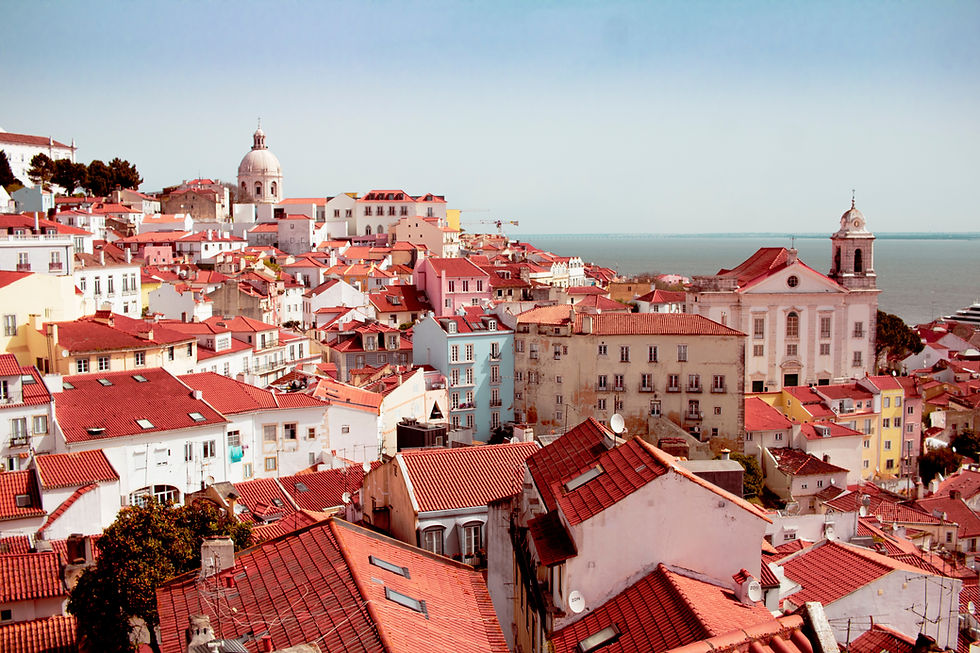
Portugal is the destination I recommend most often across my whole practice, and for gay couples it has a specific advantage: it can be either half of this list, in a single country.
Lisbon has a real gay scene, centered in Príncipe Real and Bairro Alto, if you want a few nights of that. Then you get on a plane or in a car and it disappears entirely, in the best way. The Azores are green volcanic islands in the middle of the Atlantic with crater lakes, hot springs, and whale watching, and they feel genuinely undiscovered. Madeira is dramatic, floral, and walkable along the levada trails. The Douro Valley is terraced vineyards dropping down to a river, with quintas you can stay at and a wine culture that predates most countries.
Portugal has had marriage equality since 2010 and ranks in the top five worldwide for LGBTQ+ legal protections. It is also meaningfully more affordable than France or Italy for a comparable experience, which matters when a wedding has already happened.
The Greek Islands That Are Not Mykonos

Greece's 2024 marriage equality law covers the whole country, not just the famous island. That is worth sitting with, because it means the entire Aegean is now available to you on the same legal footing, and most of it is quieter, cheaper, and more romantic than Mykonos in season.
Milos has the strangest and most beautiful coastline in the Cyclades, including Sarakiniko, which looks like a lunar landscape dropped into turquoise water. Naxos is the largest of the Cyclades and the most livable, with mountain villages, long sandy beaches, and a food culture the other islands do not match. Paros splits the difference between quiet and lively. Crete is essentially its own country: Minoan archaeology, gorges, a serious culinary tradition, and enough coastline for a two-week trip on its own.
A honeymoon that starts with two nights in Athens and then goes to one island rather than three is the version I recommend most.
Japan

Japan is the most interesting destination on this list right now, and the most nuanced.
Practically speaking, it is one of the easiest places in the world to be a gay couple as a visitor. Same-sex relationships have never been criminalized, the culture is built around privacy and impeccable service, and nobody is going to comment on two men checking into a ryokan. Tokyo's Shinjuku Ni-chōme is one of the densest concentrations of gay bars anywhere on earth if you want a night of it, and Kyoto, the Japanese Alps, and the onsen towns want nothing to do with any of that and are all the more romantic for it.
Legally, it is unresolved and moving. Japan is the only G7 country without national recognition of same-sex couples. Local partnership systems now cover roughly 93 percent of the population but carry limited weight. Five high courts have ruled the marriage ban unconstitutional, one upheld it, and in March 2026 the Supreme Court took up six cases before all fifteen justices, with a ruling expected in early 2027.
I mention that not to worry you, because none of it affects a two-week honeymoon, but because it is a genuinely remarkable moment to be in a country and paying attention.
Safari: South Africa, Botswana, and Rwanda

Safari is the honeymoon a lot of couples have quietly wanted for years and assumed was off the table. It is not, but the country you pick is not a detail.
South Africa is the first answer. Marriage equality since 2006, a constitution that led the world on this, and a safari product in the Sabi Sand and greater Kruger that competes with anywhere. Pair it with the Cape Winelands and Cape Town and you have a complete honeymoon inside one country.
Botswana is the luxury answer. The Okavango Delta, the Chobe, and the Kalahari, at a low-volume, high-cost model that means you are often the only vehicle at a sighting. Botswana decriminalized in 2019, the Court of Appeal upheld it in 2021, and parliament formally repealed the old colonial-era law in March 2026.
Rwanda has never criminalized same-sex relationships, which is unusual in the region, and gorilla trekking in Volcanoes National Park is a genuine once-in-a-lifetime anchor for a trip.
The countries I do not recommend for this trip are Kenya, Tanzania, and Uganda. All three criminalize same-sex relationships, Tanzania's penalties are among the harshest anywhere, and Uganda's 2023 law was upheld by its Constitutional Court in 2024. The classic Serengeti-and-Zanzibar honeymoon package that operators sell by the thousand is, for us, the wrong version of a very good idea. The Botswana and South Africa versions are not a downgrade.
One concrete thing worth having an advisor for: lodges in some regions will put two male travelers in twin beds unless the booking is briefed ahead of time. It is not hostility, it is an assumption, and it is entirely avoidable. It should not be your problem on night one of your honeymoon.
French Polynesia

I wrote about Bora Bora and Moorea at length in the lesbian honeymoon post and I am not going to repeat all of it here, but it belongs on this list for a reason that is specific to this conversation.
French Polynesia is a French territory, so it carries France's marriage equality protections, in place since 2013. It also has something most destinations do not: a pre-existing cultural framework for gender and sexuality outside the Western binary, in the mahu tradition, which is woven into daily life and hospitality rather than tolerated alongside it. There is essentially no gay nightlife in the whole territory, and there does not need to be.
If your honeymoon picture is an overwater bungalow and water so clear it looks retouched, this is where that picture is real.
Italy, and the Thing Nobody Says About It

Italy is the single most requested honeymoon destination in the luxury travel industry, year after year. It is also the only major Western European country without same-sex marriage, offering civil unions only since 2016, and it sits near the bottom of the European rankings for LGBTQ+ legal protections.
Both of those facts are true, and here is the third one: in practice, two men on the Amalfi Coast, at Lake Como, in the Dolomites, or in Puglia will have a lovely time and nobody will bother them. Italy is very good at hosting people from everywhere, and the tourism corridors are entirely unbothered.
I include this not to talk you out of Italy, because I book Italy constantly, but because it is the cleanest illustration of the thing this whole post is circling: a country's legal score and your lived experience as a visitor are two different measurements. Neither one tells you the whole story on its own, and a destination that scores badly is not automatically a place you should not go.
The Part Nobody Writes About: How Much of Yourself You Want to Put Away
There are very few places I would tell anyone not to go. That is not because everywhere is equally easy. It is because the honest variable is not "safe" versus "unsafe." It is how much of yourselves you are willing to set aside for a week, and for what in return.
I have clients who will only go where they can hold hands on the street and make out at dinner if they feel like it. That is a completely valid way to travel and it narrows the map in a way that still leaves a large part of the world open. Puerto Vallarta, Spain, Iceland, Portugal, South Africa, Canada, and Greece will all give them exactly that.
I have other clients who do not mind observing the local norm, keeping things at arm's length in public, and having their private life stay private, in exchange for standing in front of something they have wanted to see their entire lives. That is also a completely valid way to travel.
The data says this is a real split, not something I made up. Booking.com's 2026 Travel Proud research surveyed more than 13,000 LGBTQ+ travelers and found that 66 percent prioritize trips where they can be completely themselves, and that 40 percent would conceal their identity in order to reach a bucket-list destination. Nearly half check their surroundings before any public affection at all. Both of those groups are the same group. It depends on the trip.
So when a couple asks me about the Maldives, where same-sex relationships are criminalized and the resort islands operate as international bubbles where two gay men share a room without comment, I do not lecture them. I tell them exactly what the law says, exactly what the experience is likely to be, exactly where the friction points are, which is usually the airport rather than the resort, and then I let them decide. Same with Morocco, same with Egypt, same with Dubai. There are real trade-offs and there is no version where I hide them from you.
My job is not to decide which of those two travelers you should be. My job is to help you go where you want to go, tell you the truth about what you will find when you get there, and make sure the details are handled so that the honeymoon is about each other rather than about logistics.
If you want a broader view of how destinations stack up globally, I keep a running list of the best LGBTQ+ travel destinations and a breakdown of the Spartacus Gay Travel Index. And whichever direction you go, this is a trip worth having proper travel insurance on.
What About a Cruise?
For couples who want to wake up somewhere new every morning without repacking, a cruise is genuinely worth considering for a honeymoon, and the Mediterranean and Caribbean itineraries are especially good for it.
Both Virgin Voyages and Celebrity Cruises have strong reputations with LGBTQ+ travelers, and I wrote a full comparison of the two if you want to dig into the differences. Virgin in particular is adults-only across the fleet with year-round LGBTQ+ programming rather than a rainbow logo in June, which is a meaningful distinction.
A Note on the All-Gay Charters
If what you specifically want is a ship or a resort where every single person is part of the community, that exists. Atlantis Events and VACAYA are the two main operators running full-ship charters and resort takeovers for gay travelers, and they have devoted followings.
It is a very particular kind of experience and it is worth knowing the option is there. For most of the honeymooners I work with, though, the priority is a beautiful destination with a welcoming hotel and time alone together, and every destination on this list delivers that. If a charter is what you are picturing, I am happy to talk through whether it fits the week you have in mind.
And If You Are Thinking About Asia
Thailand became the first country in Southeast Asia with marriage equality in January 2025, and it now sits in a category of its own: an enormous gay scene in Bangkok and Phuket, world-class luxury at prices that still surprise people, and quiet romantic corners in Chiang Mai and the Gulf islands. It can be either half of this list too. I wrote a full guide to it rather than squeeze it in here.
Frequently Asked Questions
What are the best gay honeymoon destinations?
It depends on which of two honeymoons you want. If you want an established gay scene, Puerto Vallarta is the strongest all-around option, followed by Mykonos, Sitges, Gran Canaria, Madrid, Amsterdam, Rio de Janeiro, and Cape Town. If you would rather be somewhere beautiful that simply treats you well, Iceland, Portugal, the quieter Greek islands, Japan, South Africa and Botswana for safari, and French Polynesia are all exceptional. Neither list is the better one. They produce completely different weeks, and knowing which one you actually want is most of the work.
What is the difference between a gay destination and a gay-friendly destination?
A gay destination has infrastructure built for us: a gay neighborhood, gay-owned hotels and guesthouses, a gay beach, and a nightlife scene. Puerto Vallarta's Zona Romántica and the Yumbo Centre in Gran Canaria are the clearest examples. A gay-friendly destination has legal protections and a welcoming culture but no gay-specific infrastructure, because it does not need any. Iceland and French Polynesia are the clearest examples of that. The distinction matters most on a honeymoon, when what you want may be very different from what you want on a long weekend with friends.
Where should gay couples honeymoon in Europe?
Spain is the strongest single answer, because it can be either kind of trip. Sitges is a small gay seaside town thirty minutes from Barcelona, Chueca in Madrid is a year-round city neighborhood rather than a strip of bars, and Gran Canaria offers winter sun with the densest gay resort infrastructure on the continent. Spain has had marriage equality since 2005 and now tops the European rankings for LGBTQ+ legal protections. Beyond Spain, Mykonos is the iconic gay island, Amsterdam is the most romantic city on the scene side, and Iceland, Portugal, and the quieter Greek islands are exceptional for couples who want beauty over a scene.
Is Puerto Vallarta good for a gay honeymoon?
It is probably the best all-around gay honeymoon destination in the world right now. The Zona Romántica is a walkable gay neighborhood with genuine gay-owned hotels and guesthouses rather than a few chains flying a flag in June, Playa Los Muertos has a long-established gay stretch of beach, and the crowd skews couples rather than circuit. Mexico has nationwide marriage equality, completed across all thirty-two states in 2022. Go in the dry season, November through May, and consider late April, early May, or November if you want the town without the winter peak or the Pride crowd.
Can gay couples go on safari?
Yes, and it is one of the most memorable honeymoons there is, but the country matters enormously. South Africa has had marriage equality since 2006 and its constitution was the first in the world to prohibit discrimination based on sexual orientation. Botswana decriminalized in 2019 and parliament formally repealed the old law in March 2026. Rwanda has never criminalized same-sex relationships. All three are first-tier safari destinations, not consolation prizes. Kenya, Tanzania, and Uganda all criminalize same-sex relationships with severe penalties, which rules out the standard Serengeti and Zanzibar package that most operators sell. One practical detail: some lodges will assign twin beds to two male travelers unless the booking is briefed in advance, which is exactly the kind of thing your advisor should be handling for you.
How do we decide between a gay destination and somewhere quieter?
Ask yourselves how visible you want to be, and how much of that you would trade for a place you have always wanted to see. Booking.com's 2026 Travel Proud research found that 66 percent of LGBTQ+ travelers prioritize trips where they can be completely themselves, while 40 percent said they would conceal their identity to reach a bucket-list destination. Those are the same people answering differently depending on the trip. Some couples want to hold hands everywhere they go and should book accordingly. Others are comfortable following local norms in exchange for scenery they will never forget. My job is not to talk you out of either one. It is to tell you the truth about what you will find and then make the trip work.
You have spent a year making decisions about flowers, seating charts, and other people's feelings. The honeymoon should be the part where you only have to answer to each other.
If you know which of these two trips you want, I can build it. If you have no idea, that is an even better conversation to start, and it is usually a short one.