
The Best LGBTQ+-friendly hotels in the Caribbean
Updated: Sep 16
Search for a place to stay in the Caribbean and you'll turn up plenty of hotels calling themselves LGBTQ+ friendly. Nobody checks any of them.
There's no standard behind the phrase, no audit, and no consequence for a property that says it and then puts a same-sex couple through an uncomfortable check-in. It costs a hotel nothing to type, which is roughly what it's worth.
There is something underneath the word, though, if you know what to look for.
Two Things in This Industry Actually Get Checked
There are two standards worth knowing, and they check different things.
IGLTA Accredited looks at a property. A hotel applies against published criteria, submits documentation on its policies and staff training, and gets reviewed by an independent auditor before it can use the mark. It costs money and it takes work, which is the point. Across the whole Caribbean, two properties hold it.

Queer Destinations Committed looks at a workforce. It's a training certification, six modules and fifty lessons running about three hours, and it gets rolled out across a company rather than earned by one building. They've put more than two hundred thousand hospitality staff through it. Hyatt's Inclusive Collection, Palladium Hotel Group, and Meliá all hold it, which is how the distinction reaches the Caribbean.
The difference is worth understanding before you use either one. IGLTA audits a hotel. Queer Destinations trains the people in it. A property with the first has been examined. A property with the second belongs to a company that paid to educate its staff on how to treat you. Neither one is the whole picture.
What they have in common is that somebody outside the hotel checked something. That's more than the phrase on the website can say.

The Places That Hold One
First, the marriage question
The Dutch Supreme Court ruled in July 2024 that Aruba and Curaçao have to allow same-sex couples to marry, and it took effect immediately. That makes both islands rare in this region: a legal marriage, not a symbolic ceremony on a beach. It's a good reason to weight them heavily if the trip has a ceremony attached.
Zoëtry Curaçao Resort & Spa
Seventy-two suites, about ten minutes from the airport, all-inclusive in the way that means you won't be signing for things all week. It sits next to Dreams Curaçao, and guests can use both properties, so you get a small quiet resort with a larger one's worth of restaurants and a casino a golf cart ride away.
This is the only property here that lands on both standards. It's IGLTA Accredited in its own right, and it belongs to Hyatt's Inclusive Collection, which holds Queer Destinations Committed. So the building has been audited and the staff have been trained, which is about as much outside verification as exists in this category.
Brand names don't usually count for much in this conversation, but corporate policy is what keeps a front desk consistent on a Tuesday in September when the manager who cares is off shift.
This is the one I'd put in front of a couple who want the resort week without the mega-resort, and who want to be somewhere their relationship is legally recognized. It's also the strongest choice here for a wedding or a vow renewal that comes with actual paperwork behind it. Sandals has a property on the island too, and I've written about what staying with them is actually like.
If Curaçao is new to you, I've written about the island itself separately.

Boardwalk Boutique Hotel Aruba
Forty-nine casitas on a former coconut plantation in Palm Beach, adults only, family-run, with two pools and a private beach area a short walk from the busier stretch of sand.
Here's what I like about this one. Go to their website and you won't find a rainbow anywhere. No Pride banner, no "LGBTQ+ welcome" badge, nothing. They just went and got accredited, which meant paying for it, documenting their policies, and letting an outside auditor look at how they run. They also hold two Michelin Keys and a stack of sustainability certifications, so this is clearly a property that likes being measured against things.
That combination is unusual and I trust it more than a landing page with a flag on it.
The casitas each have a kitchen, a patio, a hammock, and a barbecue, which makes this a good fit if you'd rather cook a couple of nights than eat every meal out. It suits people who want a base on Aruba more than they want a resort to live inside.

TRS Turquesa, Punta Cana, Dominican Republic
Adults only, all-inclusive, on the Bávaro stretch in Punta Cana, and part of Palladium Hotel Group, which holds Queer Destinations Committed across the company.
This is the big-resort option on the page and the one that costs the least per night. Punta Cana is a short flight from most of the US East Coast, the property runs at a scale the boutique places here don't, and the adults-only format means you're not navigating a water park to get to dinner.
I'd point a couple here who want a straightforward week in the sun without a boutique price tag, or a group traveling together where the room count matters. It's not an intimate property and it isn't trying to be. What it has is a parent company that put its staff through the training and a format that works for people who want the beach, the food, and a swim-up bar without thinking much harder than that.
The Dominican Republic has no legal recognition for same-sex couples, so this one is a resort week rather than a wedding destination. Palladium's own properties are fine. Plan the trip as a stay, not a ceremony.

The Gay-Owned and Gay-Focused Places
Neither of these holds either standard. Both are places where you won't be the only same-sex couple in the room, which is a different kind of comfort and for some people the more important one.
Coqui del Mar, San Juan, Puerto Rico
The gayest small hotel in Puerto Rico by its own description, and it's earned the line. Ocean Park, adults only, the whole ground floor clothing-optional, themed rooms, weekend brunch included, and an IGLTA listing that's been current for years.
Puerto Rico is the easiest island in the Caribbean for us. No passport for Americans, a real year-round scene instead of a seasonal one, and legal protections most of the region doesn't have. If you've never taken a trip like this before and you want the training wheels version, start here.
Coqui is a guesthouse, not a resort. You're getting a pool, a small property, and a neighborhood, not a spa and four restaurants. People who love it love it for exactly that.
Sand Castle on the Beach, Frederiksted, St Croix
Adults only, on the beach, with one of the two freshwater pools and the courtyard around it clothing-optional. Ted is still one of the owners and still walks around greeting guests, which is the kind of detail you can verify in about four minutes of recent reviews and which tells you more than a mission statement does.
They've been featured in Travel and Leisure's roundup of LGBTQ+ friendly resorts in the US and Caribbean. St Croix is quieter than St Thomas, the West End around Frederiksted has a small gay-friendly bar scene, and the US Virgin Islands means no passport and US law.
You'll see this place called gay-owned in a lot of write-ups. Their own site says gay-friendly, and that's their word to choose.

The Luxury End
Round Hill Hotel and Villas, Montego Bay, Jamaica
Thirty-six oceanfront rooms and twenty-six private villas ranging from two to six bedrooms, Ralph Lauren interiors, a hundred acres above the water outside Montego Bay.
This is the property I know best, and it's the one I've written about at length after talking with them directly. Round Hill is a lead sponsor of MoBay Pride and has backed the community publicly rather than quietly. Most properties on that island would rather not have the conversation at all, so putting their name on Pride in Jamaica is a decision with weight behind it.
Jamaica needs the context, and I've given it properly in a separate piece on what the law actually says and how to travel there. Read that before you book anything on the island. The short version is that a resort week is fine and Round Hill is about as insulated and as invested as it gets there.
Take a villa with a cook if the budget stretches. That's the version of this property people don't stop talking about.

La Samanna, A Belmond Hotel, St Martin
Terres Basses, on the French side, on a beach most people would put in their top five in the region. Spa, tennis, water sports, and a kids' program, which makes it the one property here that works for a family trip instead of a couples trip.
St Martin is one of the more relaxed islands in the region about who's on the beach together, and the French side in particular doesn't blink. Belmond runs a consistent operation, which is most of what you're paying for at this level.
Book it if you're traveling with kids, if you want a beach you'll compare everything else to afterward, or if somebody else in the party needs the tennis and the spa to be worth their while.
The Oddity Worth Knowing About
Queen's Hotel, Bar & Kitchen, Saba
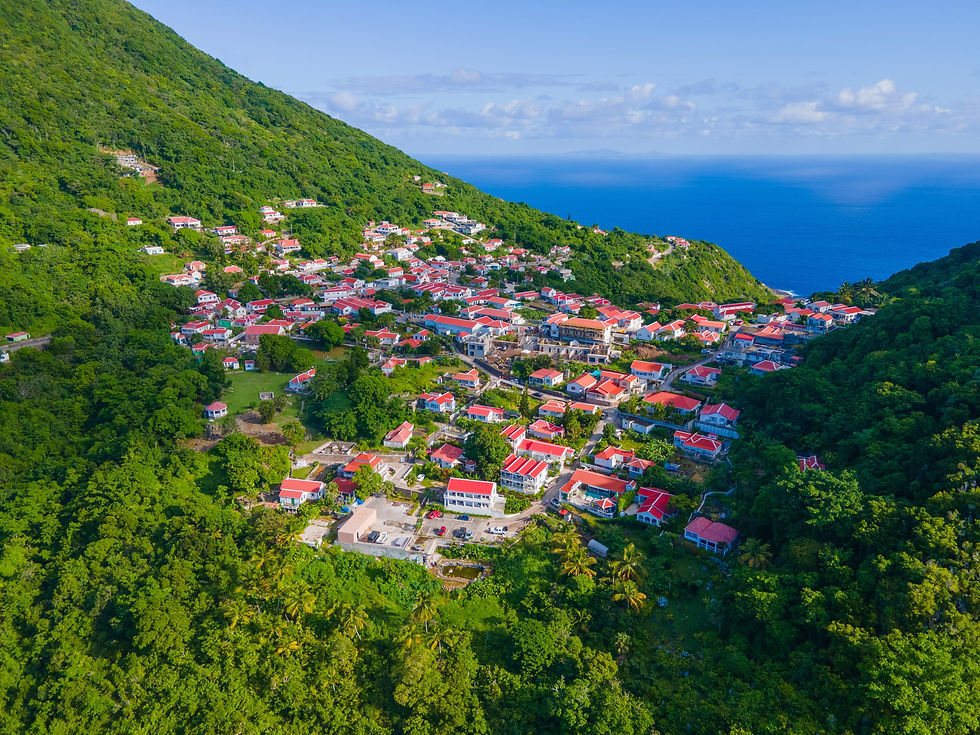
Saba is five square miles of dormant volcano with no beach worth the name, about fifteen hundred residents, and a runway that shows up in videos of terrifying airports. Almost nobody goes. That's the appeal.
Queen's, which was Queens Gardens Resort until the rebrand, sits in The Bottom with a jacuzzi in every room facing down the valley. The restaurant is the reason most people book, and the diving off Saba is some of the best in the Caribbean with almost no boats on it.
It's the most queer-friendly place to stay on the island, which admittedly is a small field. Saba is part of the Netherlands, which does most of the work there.
Go if you want hiking, diving, and dinner. Don't go looking for a beach or a bar scene, because there isn't either one.
Two I Looked At and Left Off
Both of these turn up on other lists. Here's why they're not here.
Le Guanahani in St Barts. You'll find it recommended under that name all over the place. The property closed after Hurricane Irma and reopened under Rosewood management as Rosewood Le Guanahani St Barth, a considerably more expensive hotel than the one those write-ups are describing. Some of them also call it women-owned, which doesn't hold under Rosewood. Book it if the budget stretches, just know what you're booking.
Tiamo in the Bahamas. Still trading on South Andros, still eco-villas, still remote and lovely by every account. It gets called gay-friendly in plenty of places, and the property itself has never said so anywhere I can find. That may just be a quiet hotel rather than an unwelcoming one. It's a long way to go on somebody else's assumption, so it's not a recommendation I'll make.
Where the Certification Argument Falls Apart
Both standards cost money. IGLTA Accredited needs a membership underneath it plus the audit. Queer Destinations Committed is a training program a company buys and rolls out. That's all fine for Hyatt, Palladium, or a boutique hotel with two Michelin Keys and a certification habit. It's a real barrier for a six-room guesthouse running on thin margins that has been safe for gay travelers for thirty years without ever filling in a form about it.
The certified properties above are good and I'd send people to all three. But the two places where you're most likely to feel like you're somewhere made for you, Coqui del Mar and Sand Castle, hold neither standard and probably never will.
There's a second limit. A brand-level distinction covers a company, not the specific human working your check-in. Palladium putting its staff through the training is a real commitment and it's still not a promise about one Tuesday afternoon in Punta Cana.
So read both as a floor, not a ceiling. They tell you somebody outside the hotel checked something, in a category that otherwise runs entirely on self-description. That's worth real weight and it isn't worth everything.

Which One Is Actually Right for You
The honest sorting is less about the hotels than about what you want the week to feel like.
If you want to be surrounded by other queer people, it's Coqui del Mar or Sand Castle. Small properties, gay clientele, clothing-optional areas, and the specific relief of not doing any calculating at breakfast.
If you want a proper resort week where the outside world goes away, it's Zoëtry Curaçao. All-inclusive, two properties' worth of amenities, both certifications, and legal recognition on the island if the trip has a ceremony attached to it.
If the budget is the deciding factor, it's TRS Turquesa. Adults-only all-inclusive, a short flight, and a parent company that put its people through the training.
If you want a base instead of a resort, it's Boardwalk Aruba. A casita with a kitchen, a beach a short walk away, and an island you'll actually leave the property to see.
If you want the trip you'll still be describing in five years, it's a villa at Round Hill.
If you're traveling with kids, it's La Samanna, and it's not close. It's the only property here built for that.
If you want somewhere nobody you know has been, it's Saba.

The Part That Matters More Than the Hotel
I'd rather you book the third-best property here with a few things sorted than the best one without them.
Book under both legal names, exactly as they appear on your passports, and make sure the reservation shows one bed rather than two unless you want two. Sorting that before arrival costs one email. Sorting it at a front desk in a lobby costs you the first hour of your vacation and some of your mood.
If the trip involves a ceremony, find out the paperwork requirements months out. Notice periods and residency requirements are real and they're not something you can assemble after you land. Aruba and Curaçao are the two places here where a marriage is actually a marriage, and even there the timing rules will surprise you.
And decide honestly how much you want to leave the property. The answer changes which island you should pick more than it changes which hotel, and it's worth a conversation before anyone books anything. I've written more about where the beaches are worth the trip if that's the part you care about, and about honeymoon destinations if this is that kind of trip.
Frequently Asked Questions
What LGBTQ+ hotel certifications actually mean something?
Two. IGLTA Accredited means a property applied against published criteria, submitted documentation on its policies and staff training, and was reviewed by an independent auditor before it could use the mark. Queer Destinations Committed is a training certification, six modules and about three hours, rolled out across a company rather than earned by one building. Both cost money and both involve somebody outside the hotel checking something, which separates them from a property simply describing itself as LGBTQ+ friendly.
Which Caribbean hotels hold one?
Zoëtry Curaçao Resort & Spa and Boardwalk Boutique Hotel Aruba are both IGLTA Accredited, appearing on IGLTA's list of the first fifty accredited properties worldwide. Zoëtry also sits inside Hyatt's Inclusive Collection, which holds Queer Destinations Committed, so it's the only Caribbean property carrying both. Palladium Hotel Group and Meliá also hold Queer Destinations Committed, which covers their Dominican Republic resorts including TRS Turquesa in Punta Cana.
Can same-sex couples legally marry anywhere in the Caribbean?
Aruba and Curaçao, yes. The Dutch Supreme Court ruled in July 2024 that both had to allow same-sex marriage, and it took effect immediately instead of waiting on local legislation, so a wedding on either island is legally binding and not just symbolic. Most of the rest of the region offers symbolic ceremonies at best, and several islands still criminalize gay sex between men.
Is Puerto Rico the easiest Caribbean island for LGBTQ+ travelers?
For Americans it's the simplest by a distance. No passport, US law and protections, a year-round scene in San Juan instead of a seasonal one, and gay-specific accommodation like Coqui del Mar. The US Virgin Islands, including St Croix, are the next easiest for the same legal reasons.
Are gay-owned hotels safer than big-brand resorts?
They're different, not safer. A gay-owned or gay-focused guesthouse gives you a room full of people like you and no need to think about it. A large brand gives you corporate policy, staff training, and a complaints process that works when something goes wrong. The right answer depends on whether you want community or infrastructure, and some trips want one and some want the other.
Do I need to worry about local law if I'm staying at a resort?
It depends entirely on the island, which is why island choice matters more than hotel choice. Jamaica still criminalizes gay sex between men and needs real planning, and I've covered that in detail separately. Aruba, Curaçao, Puerto Rico, the US Virgin Islands, St Martin, and Saba are all legally straightforward by comparison. Nobody is enforcing anything against tourists inside a resort, but the law sets the temperature outside the gates.
Should I tell the hotel we're a same-sex couple when booking?
You shouldn't have to, and at these properties I wouldn't expect you to need to. What I'd do regardless is confirm the bed configuration in writing and make sure both names are on the reservation as they appear on your passports. You're not coming out to a hotel by doing that. You're keeping yourself off a front desk sorting out a room type on the first afternoon of your vacation.
Pick the island first and the hotel second. The Caribbean looks like one place on a map and it isn't, and a hundred miles of water can be the difference between a legal marriage and a criminal statute. No hotel website is going to tell you which side of that line you're landing on, and that's the part I'd want to talk through with you before anybody puts down a deposit.

